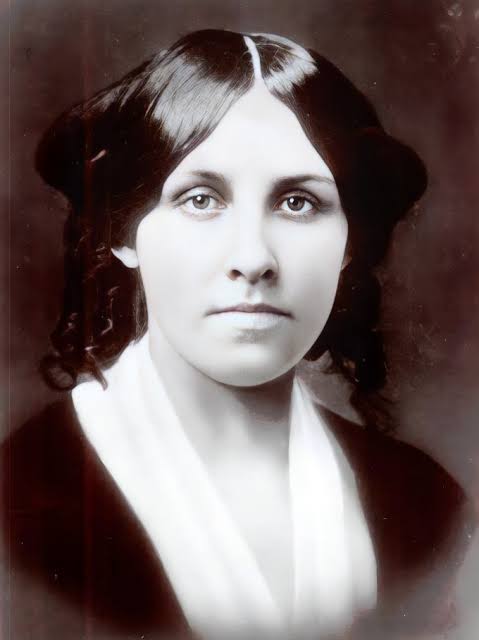
 The other day on social media, I came across one of my favorite stories—a tale of determination, persistence, and grit. In this case, the saga involved writer Louisa May Alcott. It’s easy to believe famous authors (and artists of any kind) have this easy glide into fame and success. Unfortunately, for most, that’s not the case.
Massachusetts schoolteacher Louisa May Alcott faced relentless and brutal rejection of her novel, “Little Women.” Publisher James T. Fields not only belittled it but told her she had no future as a writer. “Stay in teaching,” he advised. And yes, in Alcott’s case, misogyny probably played a big role, but Louisa persisted. “Little Women” was finally published by Roberts Brothers in Boston, 1868. The beloved tale of the March sisters went on to become a classic, taught in schools for centuries to come.
Ad agency copywriter F. Scott Fiztgerald kept 122 rejection notices pinned to his apartment walls, reminding himself to keep trying. One editor told him he’d have a decent book if “he’d get rid of that Gatsby character.” Thankfully, Francis didn’t listen. His first big break came in 1920 with the success of “This Side of Paradise”. He went on to publish four more novels, mostly set in the Jazz Age. Many of his books were turned into movies, including “The Great Gatsby.”
English teacher Stephen King received so many “Thanks-but-no-thanks” responses on his fourth attempted novel “Carrie” that he threw the manuscript in the garbage. He and his wife Tabitha were living in a trailer at the time. She fished it out of the trash and urged him to finish. King begrudgingly did. Finally in 1973, Doubleday accepted the manuscript, and it went on to top the book charts that year. King subsequently published over 60 novels, most of them best-sellers. Many were turned into movies, like “The Shawshank Redemption,” the “Shining,” and of course, “Carrie.”
Single welfare mother, J. K. Rowling was turned down by twelve publishing houses before someone agreed to take on her work, “Harry Potter and the Philosopher’s Stone.” At one point, she even used a male pseudonym, hoping that might help. It didn’t. “They don’t even want me in a beard,” she joked to a friend. One day Bloomsbury publisher Nigel Newton brought the book home and asked his 10-year-old daughter to read the first chapter. When she proclaimed it “the best thing possible,” he bought the rights. Rowling went on to write the Harry Potter seven-book series that eventually sold over 500 million copies.
Educational consultant Jack Canfield was rejected a whopping 144 times while pitching “Chicken Soup for the Soul.” Publishers hated the title, didn’t like the short story format, and said there wasn’t enough sex and violence. But Canfield remained positive and knew that his publisher was out there. Finally, at a Florida book convention, Canfield found a small health firm that agreed to take it on. “Chicken Soup” not only became a New York Times bestseller and sold over one million copies that first year but generated a huge series of “Chicken Soup” books.
Sigh. I love these tales—and there are plenty of them.
They go to show that when we sign up for any life in the arts—writing, painting, music, whatever—you sign up for two things. One is an amazing passion. But you also sign up for rejection, especially if you try and put your work out in the world.
Who knew? It turns out the secret sauce for becoming a famous author—or whatever you wish to be—isn’t just talent. It’s a rock-hard, stubborn, unwavering belief in yourself. These authors never gave up. And thank God, they didn’t.
Do you have any favorite “They never quit” stories? Comments are always welcome, and if you’d like to receive posts by email, just press here. Thank you!


Carol Cassara
I think persistence is the key to any kind of success. Just about every person who has achieved anything has faced rejection, I think.
Laurie Stone
Carol, So true. For some reason, it’s especially helpful for me to hear about famous author’s rejections.
Beth Havey
Wow Laurie, I knew some of these stories but never all of them. It just underlines the need to believe in one’s work and to never ever give up.
Laurie Stone
Beth, So true. It makes me feel better to know even King and Fitzgerald had their struggles getting published.
Pennie Nichols
This is on point. I set goals each year for submissions (and rejections) so it bites a little less.
Laurie Stone
Pennie, That’s a great idea. Each rejection still hurts, but there’s so much competition out there, have to keep that in mind.
Diane
This is so inspiring to me, Laurie! Thank you so much. It’s just what I needed to hear!
Laurie Stone
You, my dear, are inspiring to me. You’re talented, prolific, and dedicated. I love that.
Liane Carter
Great post. This is my key takeaway: “turns out the secret sauce for becoming a famous author—or whatever you wish to be—isn’t just talent. It’s a rock-hard, stubborn, unwavering belief in yourself.” As writers, it’s imperative we grow thick skin and persevere.
Laurie Stone
Liane, Yes, growing a tough hide was the first order of business to becoming a writer!